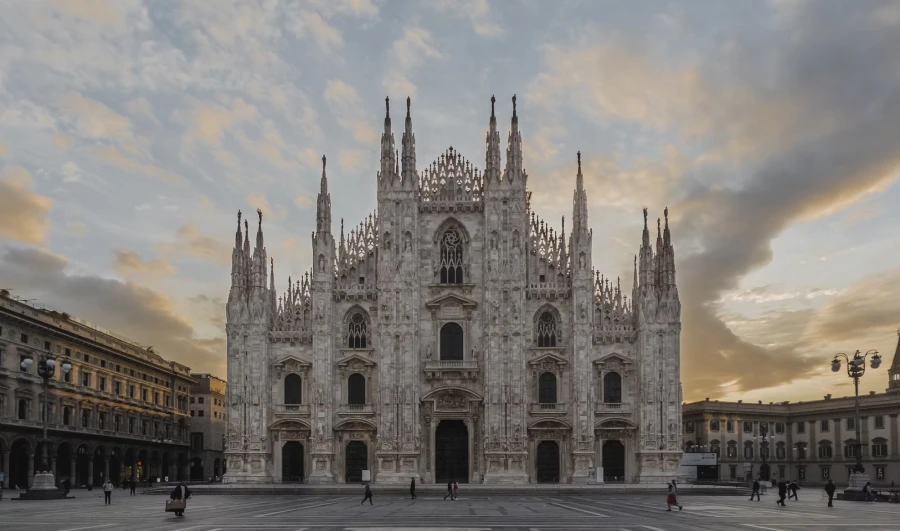
Inside the Duomo of Milan, there is an extensive artistic and religious heritage. Its walls and floors feature marble sculptures, the tombs of notable figures, and religious relics of great archaeological value that document the evolution of European Gothic art.
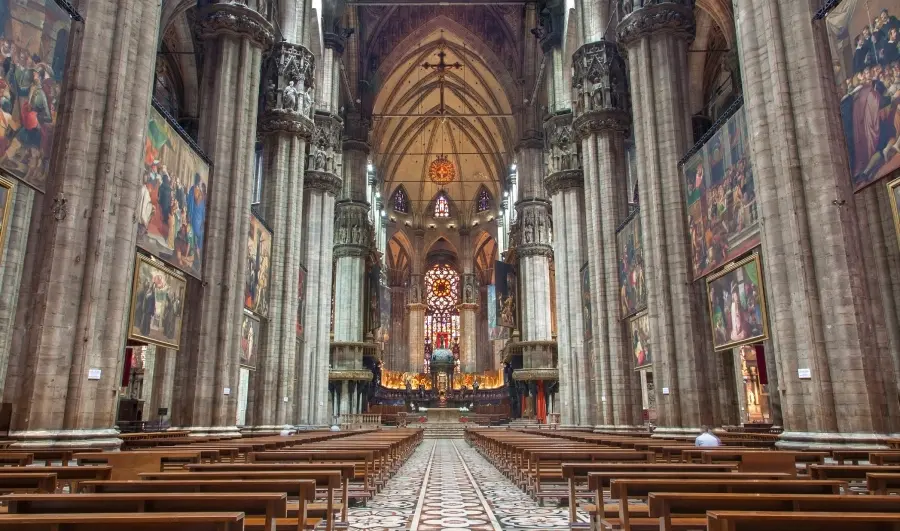
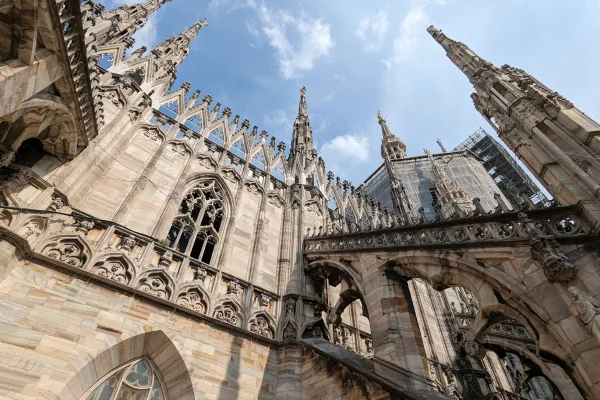
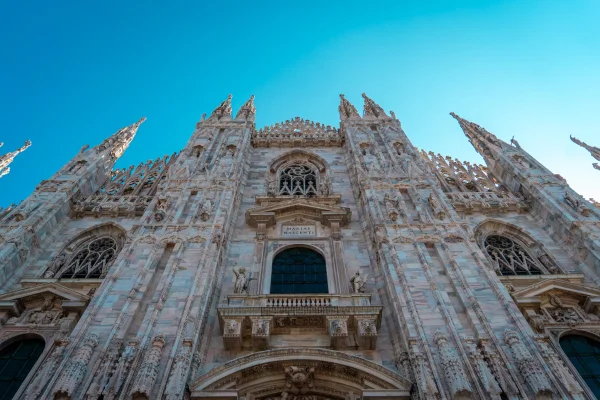
Construction of the Milan Duomo began in 1386. This is the largest Gothic cathedral in Italy, thanks to the work of 78 architects and master builders who designed it over several centuries. The building is the greatest example of the International Gothic style in Italy. Inside the Duomo of Milan, the space has a capacity for 40,000 people and houses thousands of sculptures along with 164 windows decorated with majestic stained glass, while the High Altar stands as the center of the liturgy.
Parts inside of the Duomo Milan
There are several parts of the Duomo of Milan with important areas inside each with unique features and historical significance. These are some of them:
Artistic masterpieces and the High Altar
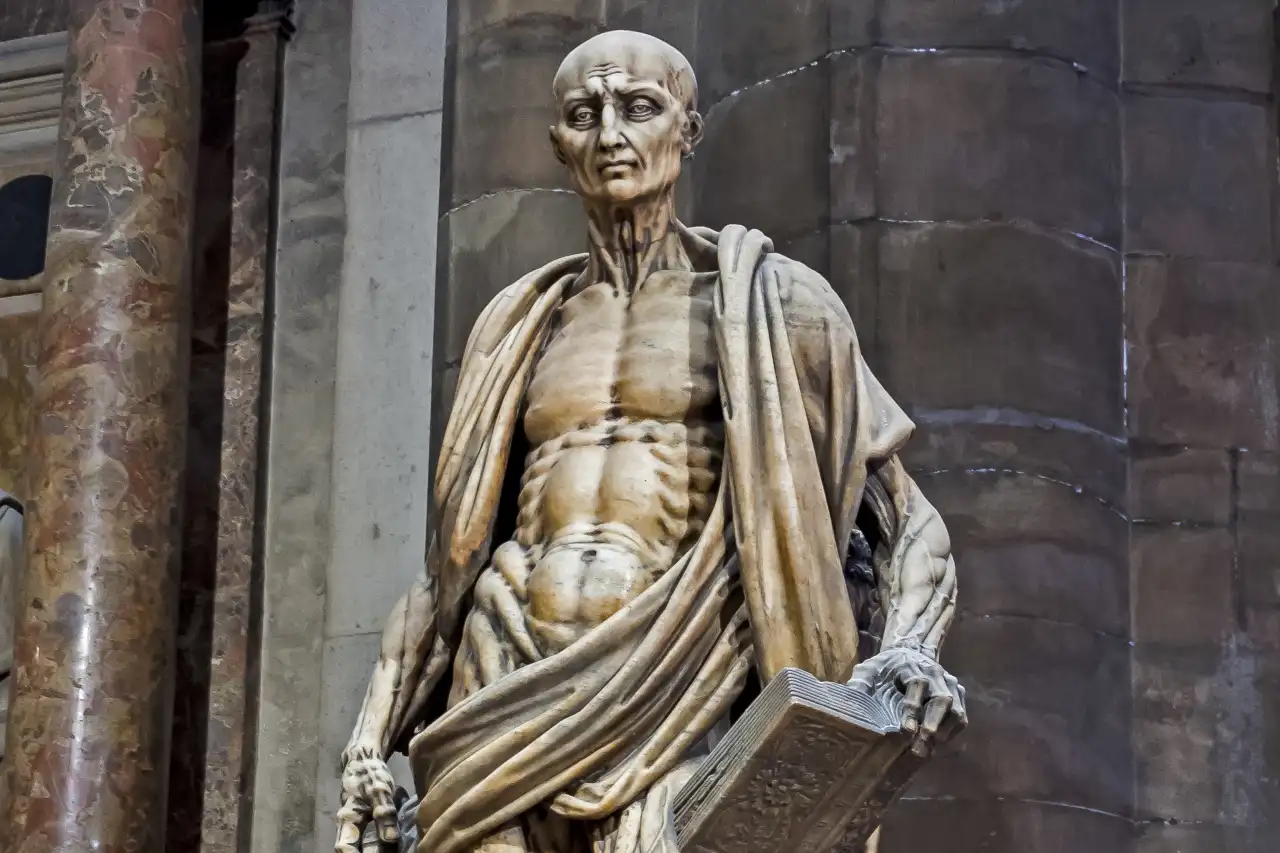
The Duomo di Milano contains over 3,400 statues throughout its interior and exterior structures. These sculptures include the world-famous depiction of Saint Bartholomew Flayed, a masterpiece created by Marco d’Agrate in 1562 and located within the south transept. This anatomical sculpture represents the apostle holding his own skin draped over his shoulders like a robe to symbolize his martyrdom.
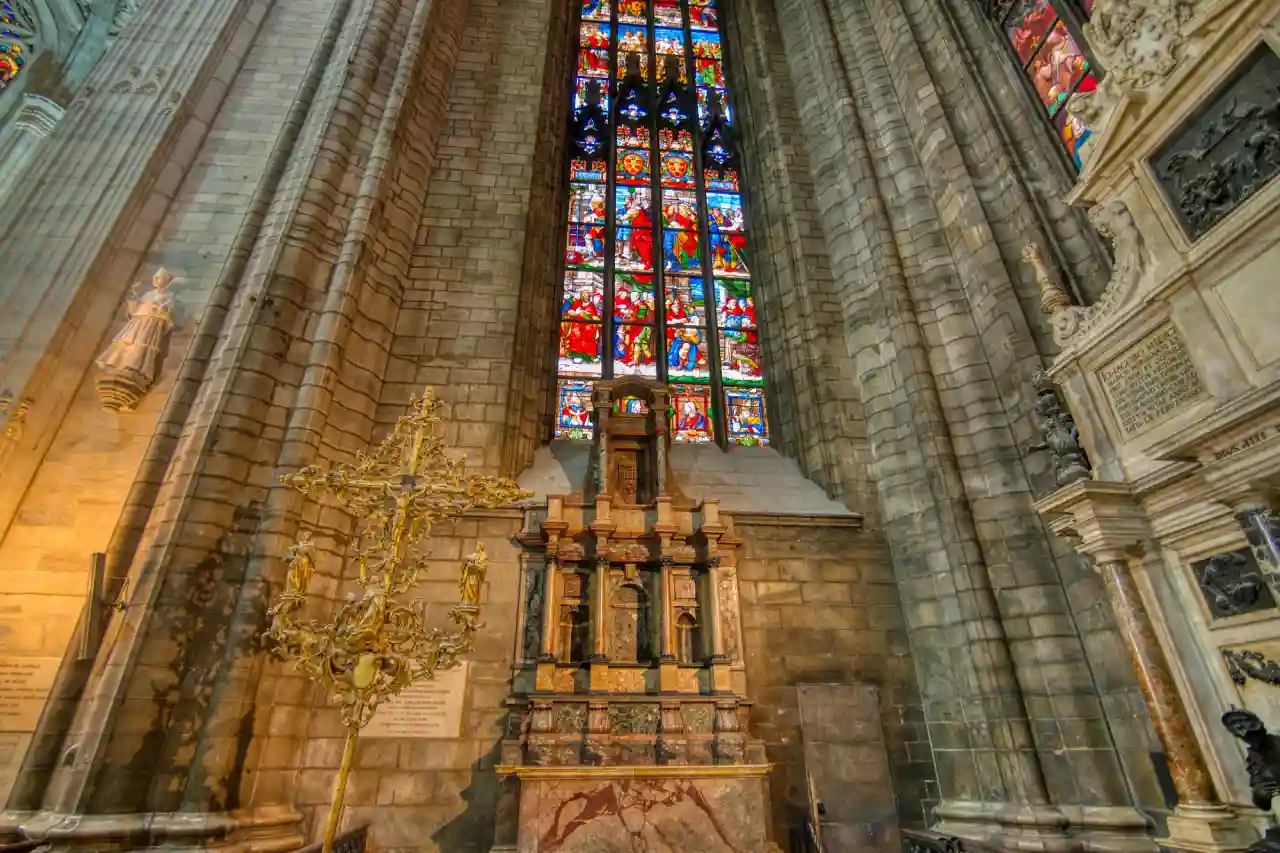
The cathedral also features 164 large stained-glass windows depicting various biblical scenes and saints. These vibrant windows fill the internal space with colorful light and intricate artistry.
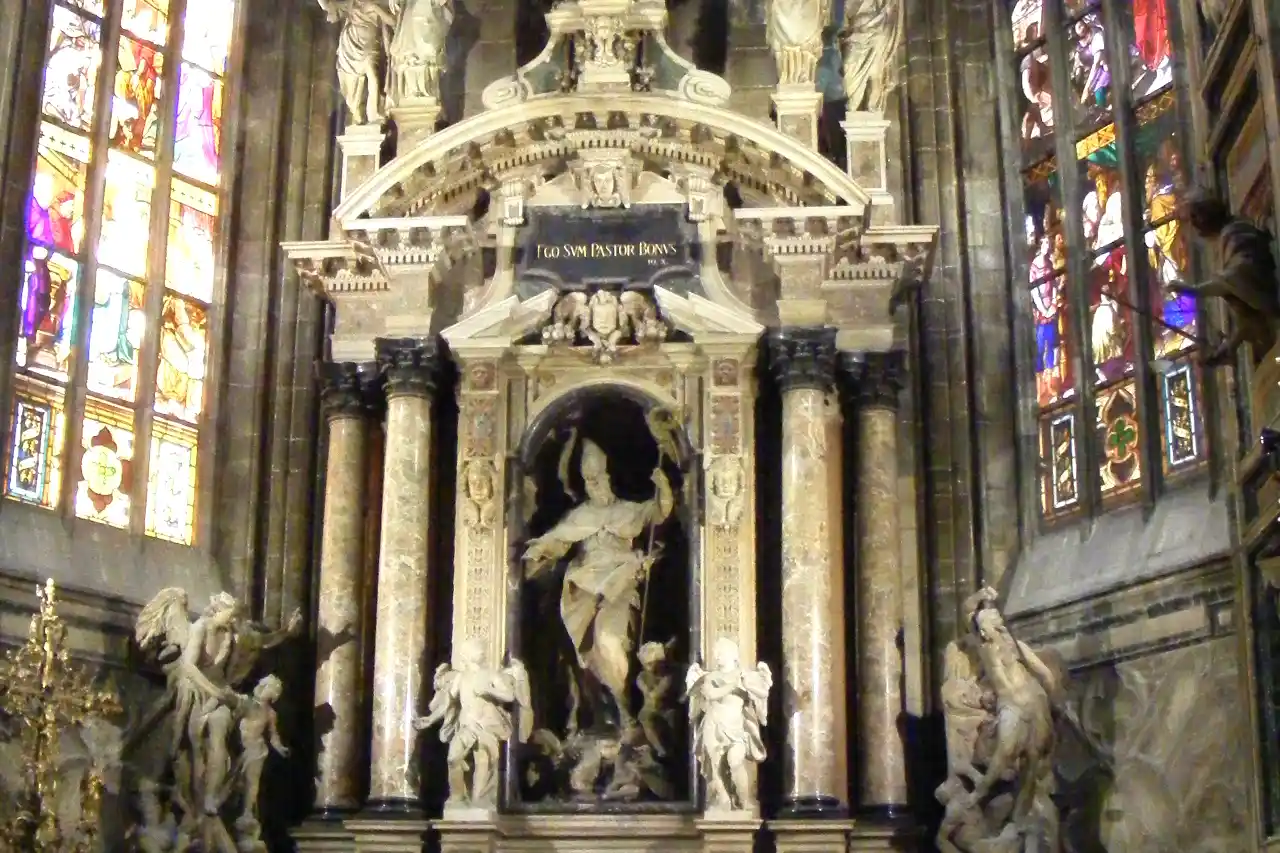
The High Altar of the Milan Duomo stands in the center of the presbytery and constitutes the main point of the liturgy. Secondary altars occupy the lateral areas of the presbytery, including the Altar of Saint Charles Borromeo. This Baroque structure features marble columns, a curved pediment, and a central niche with a sculpture. Reliefs and figures accompany the design.
Madonnina
The Holy Nail (Sacro Chiodo)
The Duomo di Milano houses the Holy Nail in a niche in the ceiling above the High Altar. This relic is believed to be a nail from the True Cross of the Crucifixion. A device called the Nivola, designed by Leonardo da Vinci, is used by the Archbishop of Milan to retrieve the relic during the annual Rite of the Nivola. A red light marks the location of the nail so that visitors can identify its position from the floor.
The rite has been part of the cathedral’s history and the city’s religious practice.
The Madonnina
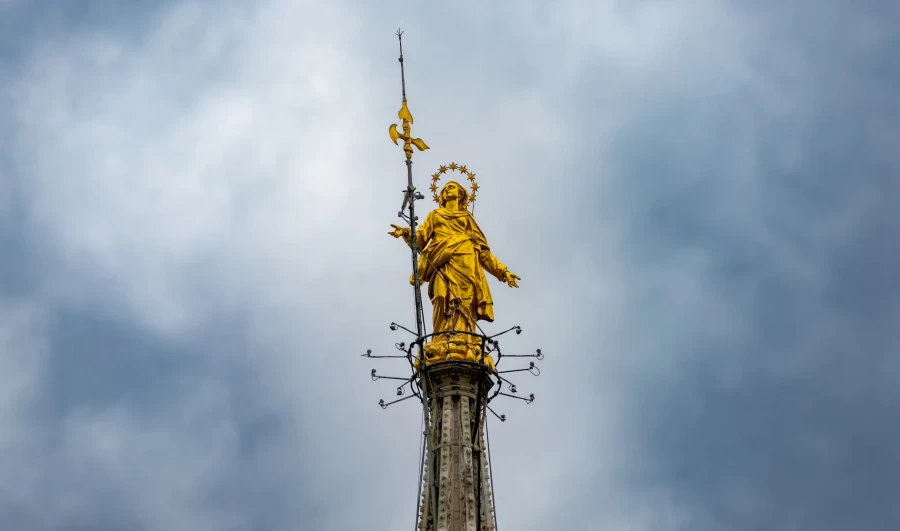
The Madonnina is the famous golden statue of the Virgin Mary that sits on top of the main spire of the Duomo Milan. This statue is a symbol of the city and you can see its golden glow from many places in Milan.
Inside the cathedral, you can find smaller versions of the Madonnina in different spots. These smaller statues honour the larger one on the spire. The Madonnina’s iconic look and its presence throughout the Duomo make it a key part of the cathedral’s charm and history.
The Central Nave and Aisles
The Duomo’s layout is like a basilica with a wide central nave and smaller side aisles. The central nave is twice as wide as the side aisles giving it a grand feel. This main area is used as the main pathway through the cathedral.
The Duomo is divided into five aisles with 52 tall columns that support the high ceiling. This vast space can hold up to 40,000 people making it one of the biggest Roman Catholic cathedrals in the world.
Archaeological Complex of the Duomo Milan
Beneath the cathedral, there is an archaeological area with the remains of ancient churches and other historic sites. This area includes:
Basilica Vetus: One of the oldest churches in Milan.
Baptistery of Santo Stefano Alle Fonti: A place used for baptisms in the past.
Basilica di Santa Tecla: An ancient church that once stood where the Duomo is now.
Christian Baptistery of St. John: Another site for Christian baptisms.
Former graveyard: Where people were buried long ago.
The Trivulzio Candelabrum
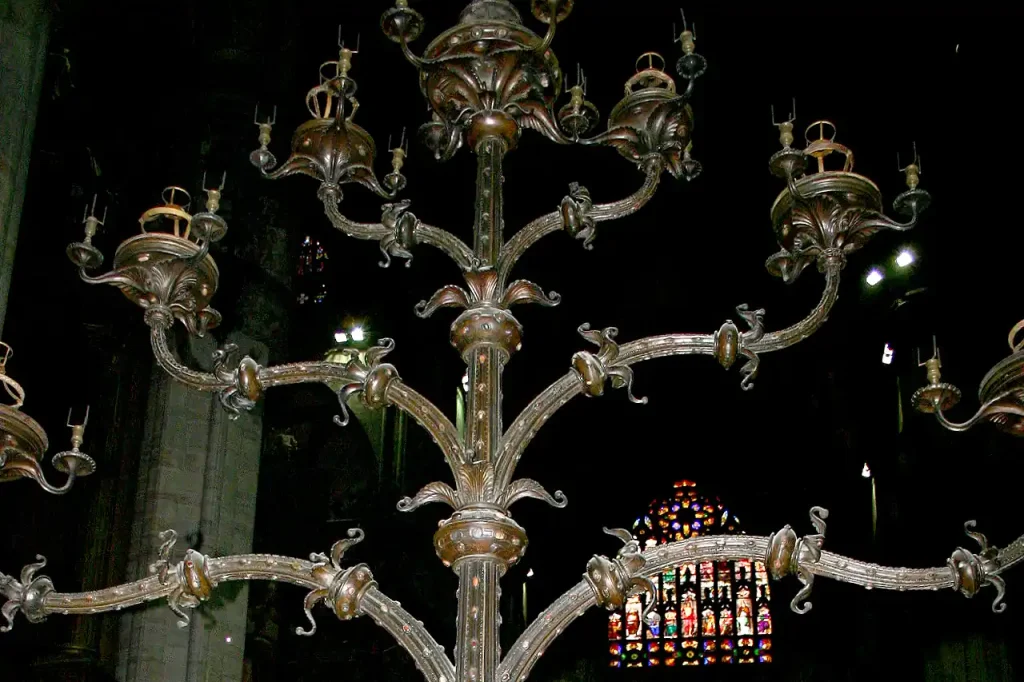
The Trivulzio Candelabrum stands in the north transept of the cathedral. This bronze structure reaches a total height of five meters. The French goldsmith Nicolas de Verdun created the base and the branches during the 12th century.
The central stem supports seven candle holders that represent the seven gifts of the Holy Spirit. The bronze base displays reliefs of Old Testament scenes and zodiac symbols. The cathedral clergy use this candelabrum during the most important religious festivals of the year.
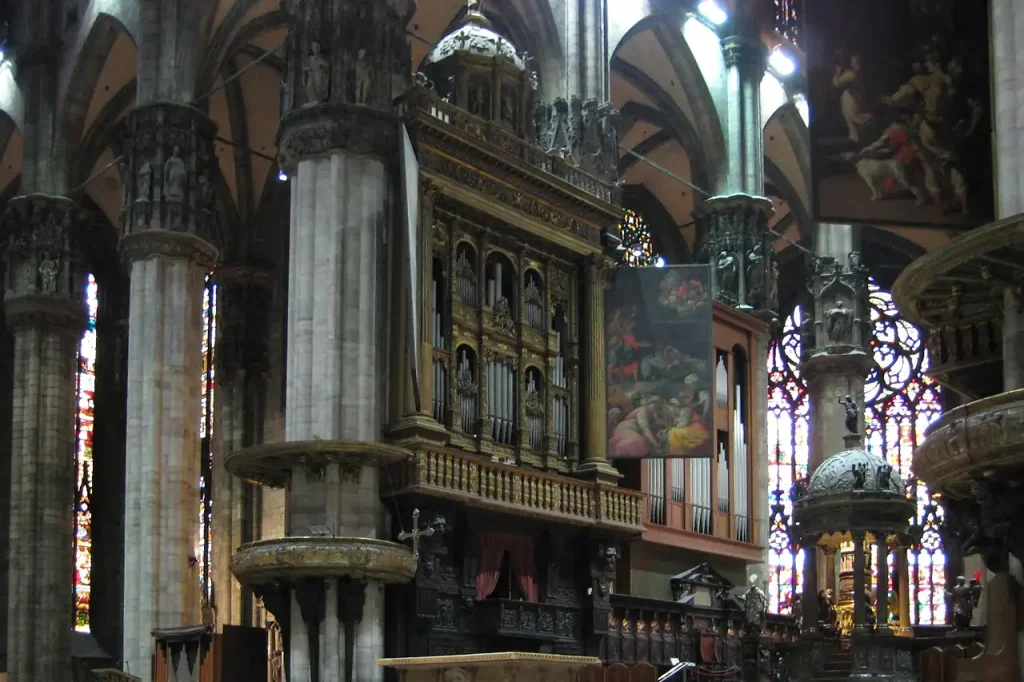
The Great Organ is a central musical installation inside the Duomo of Milan. This instrument features five separate organ bodies and over 15,000 pipes. The Mascioni and Tamburini companies built the current mechanical structure in 1938.
The organists control the sound through a large console with five manuals and a pedalboard. The pipes reach heights of over nine meters in the largest sections. This mechanical system allows the performance of complex liturgical music during the daily services.
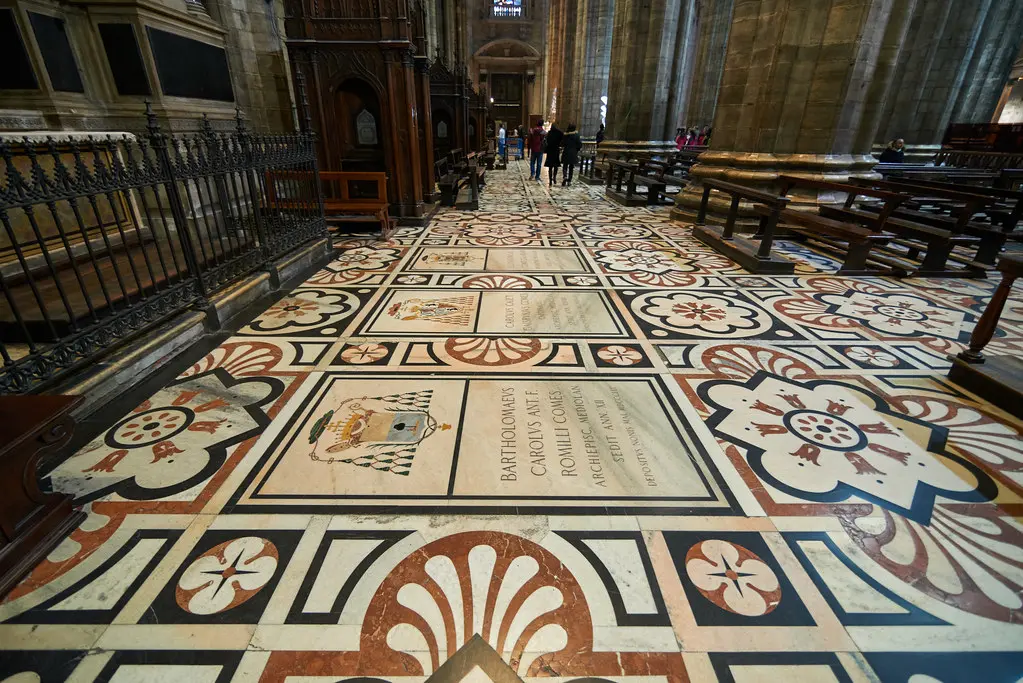
One of the most fascinating elements sits right on the ground. Artisans crafted the marble floor over several centuries. This impressive mosaic combines white, red, and black marble in complex geometric patterns.
These designs create a visual effect of movement as visitors walk across them. Every section follows rules of symmetry and perspective. Consequently, the floor generates an optical illusion of depth. This craftsmanship reflects both mathematical precision and the artistic ambition of the Renaissance. These features turn the floor into a masterpiece of sacred design.
Photo: “Duomo di Milano — Marble floor design” by Jorge Láscar.
The Sundial (Meridian Line)
A brass meridian line runs across the floor near the entrance of the cathedral. Astronomers from the Brera Observatory installed this sundial in 1786. Sunlight enters through a small hole in the roof of a south-side chapel and strikes the brass strip at noon.
The line features zodiac signs that indicate the months and the position of the sun. The architects designed this system to regulate the clocks of the city.
The Doors of the Duomo Milan
The Duomo Milan has several doors each with its own unique design:
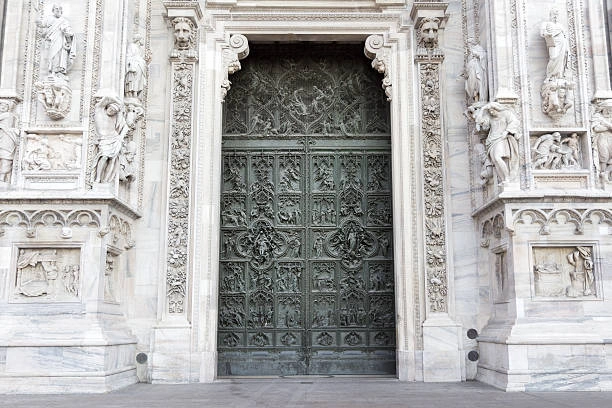
The main door was created by Ludovico Pogliaghi and was completed in 1906. It shows the Joys and Sorrows of the Virgin Mary. The left part of the door shows scenes of Mary’s sorrows while the right part shows her joys.
The side door of the cathedral of Milan is decorated with reliefs which are images carved into the surface.
These reliefs are made of Carrara marble which is a high-quality stone. Above the central door, there is a large curved piece called the tympanum which shows the story of the Creation of Eve. These detailed doors are an important part of the cathedral’s design and tell stories from the Bible.
Funerary monuments
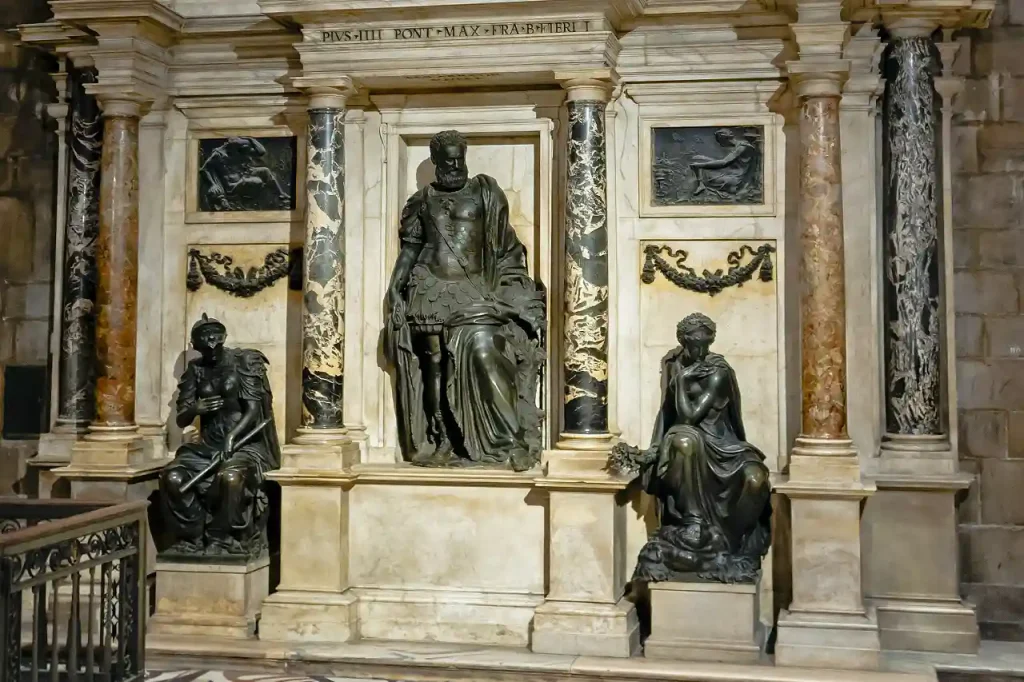
The cathedral houses several funerary monuments of figures with great historical relevance. For example, the tomb of Gian Giacomo Medici sits inside the Duomo of Milan, who served as a soldier and commanded the imperial troops during the 16th century. Leone Leoni constructed this marble tomb between 1560 and 1563.
Furthermore, the cathedral preserves the remains of Saint Charles Borromeo in a silver sarcophagus. This site functions as an important pilgrimage point for visitors. The building also contains the red marble sarcophagi of early archbishops such as Ottone Visconti.
Photo: “Gian Giacomo Medici grave in Milan Duomo” by Daniel Case.
More information about the Duomo Milan
TRAVELER INFORMATION
Duomo Milan Dress Code
We explain the strict dress code at Milan Cathedral, detailing which items of clothing are prohibited for men, women, and children…